Global health sector strategies 2022–2030
The Seventy-Fifth World Health Assembly noted with appreciation the new Global Health Sector Strategies on, respectively, HIV, viral hepatitis and sexually transmitted infections for the period 2022–2030 (GHSS) and approved its implementation for the next 8 years.
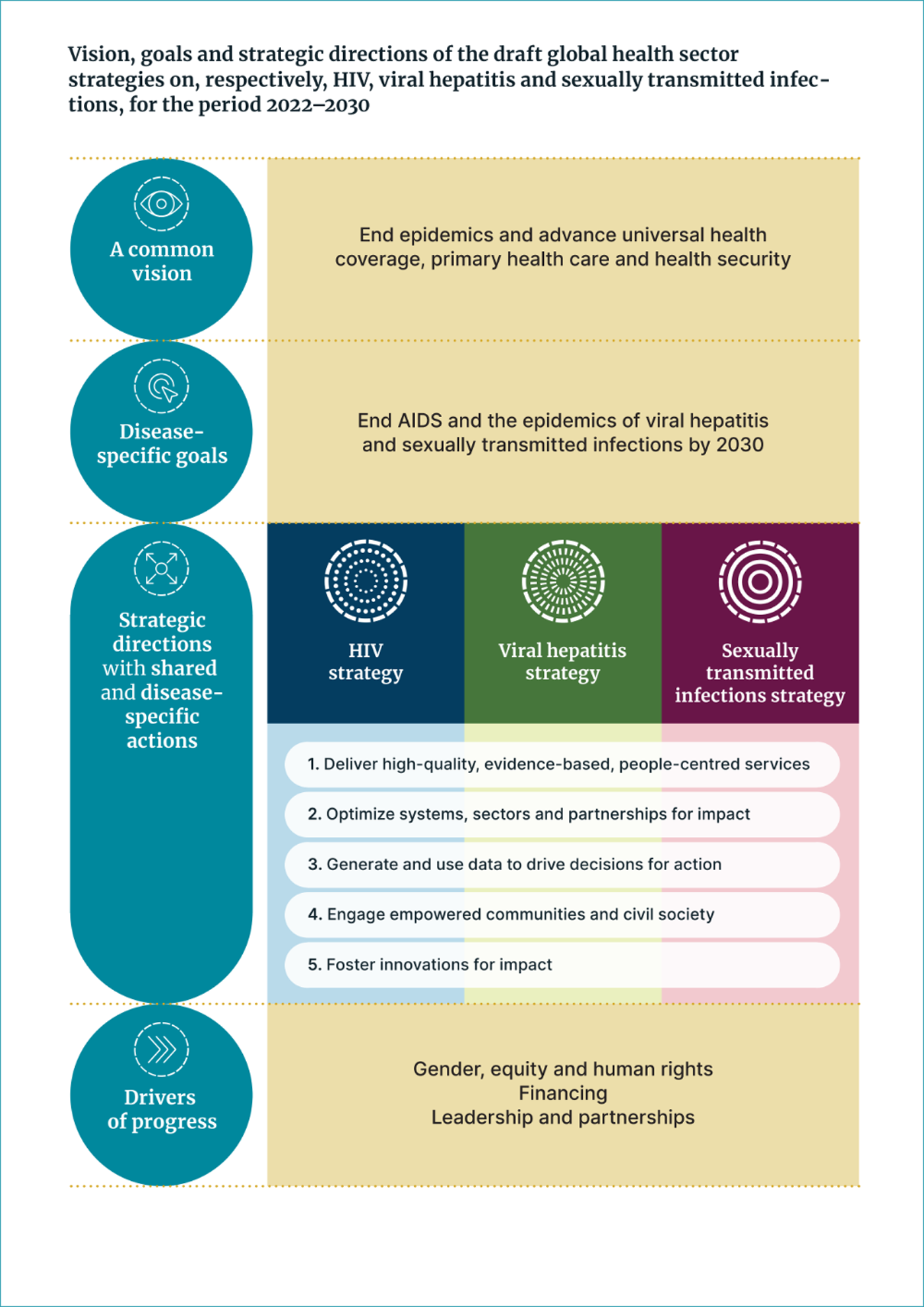
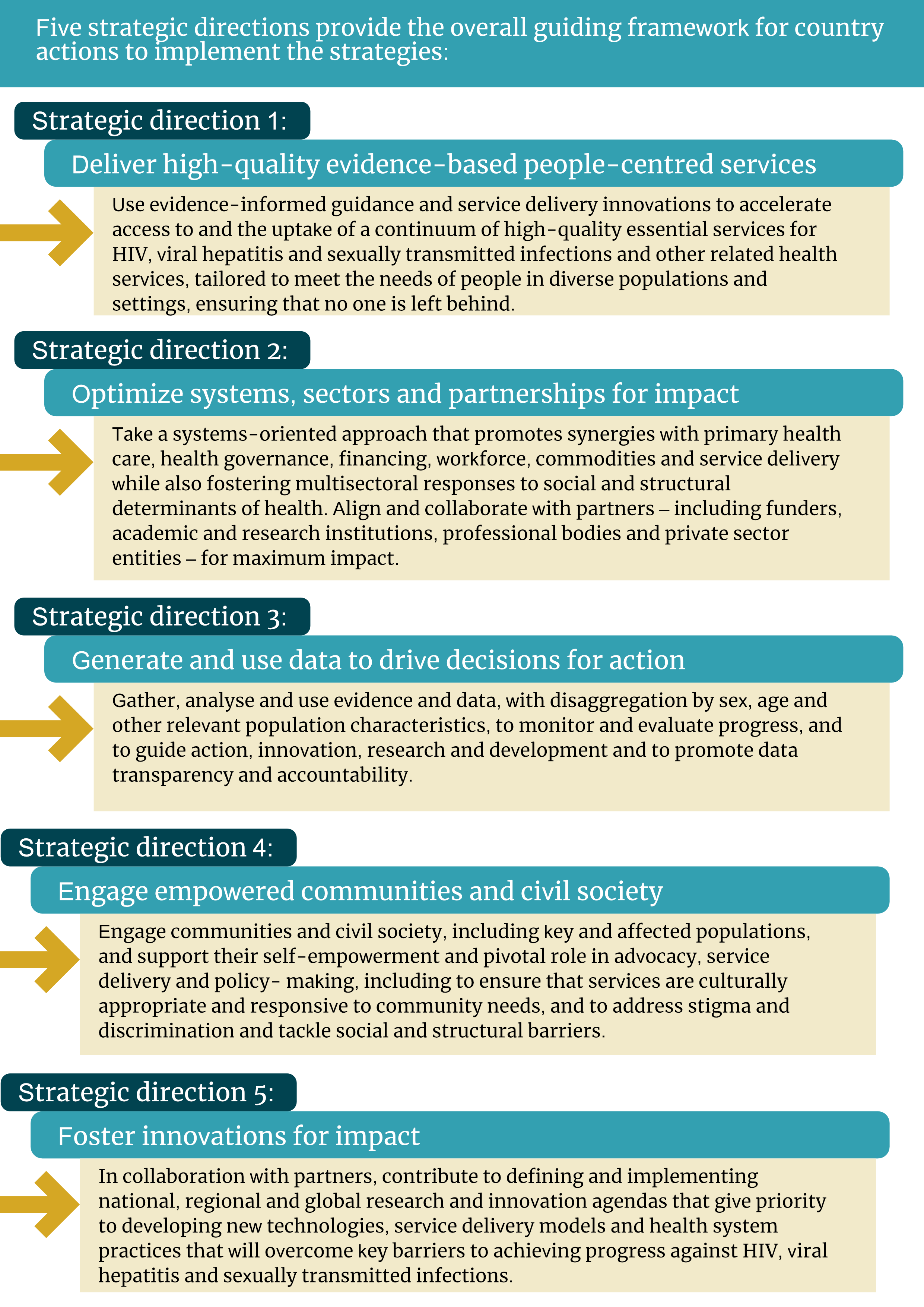
The new strategies propose a common vision to end epidemics and advance universal health coverage, primary health care and health security in a world where all people have access to high-quality, evidence-based and people-centred health services. The GHSS promote the disease-specific goals to end AIDS and the epidemics of viral hepatitis and sexually transmitted infections by 2030, with 5 strategic directions providing the overall guiding framework for achieving these goals.
Vision and goals
Strategic directions
Theory of change

Report on progress and gaps
In 2022, the Seventy-fifth World Health Assembly (Resolution A75/VR/9) requested the Director-General to report on the progress made in the implementation of the Global health sector strategies 2022-2030 (GHSS) to the Health Assembly in 2024 (see Report by the Director-General, document A77/33 (2024 PDF, 320 KB)), 2026, 2028 and 2031, noting that the 2026 report will provide a mid-term review based on the progress made in meeting the strategies’ 2025 targets and the 2030 goals.
The report 2026 mid-term progress report is the second in a series of biennial progress reports on the implementation of the GHSS. The first progress report was published in 2024.
2026 mid-term progress report – key messages
- The latest data suggests progress is mixed and the world is off track to reach the 2030 targets for HIV, viral hepatitis and STIs.
- HIV has seen the strongest gains, but funding cuts threaten them.
- Viral hepatitis deaths are rising, not falling.
- STIs are likely getting worse, but weak surveillance systems hinder accurate reporting.
- The integration of health services, strengthening community leadership, improving the use of integrated health data, protecting essential programmes during times of disruption, and focusing investments where they will have the greatest impact are key levers going forward.